Uzbek tableware: lagan, piala, kosa, choynak and Rishtan ceramics
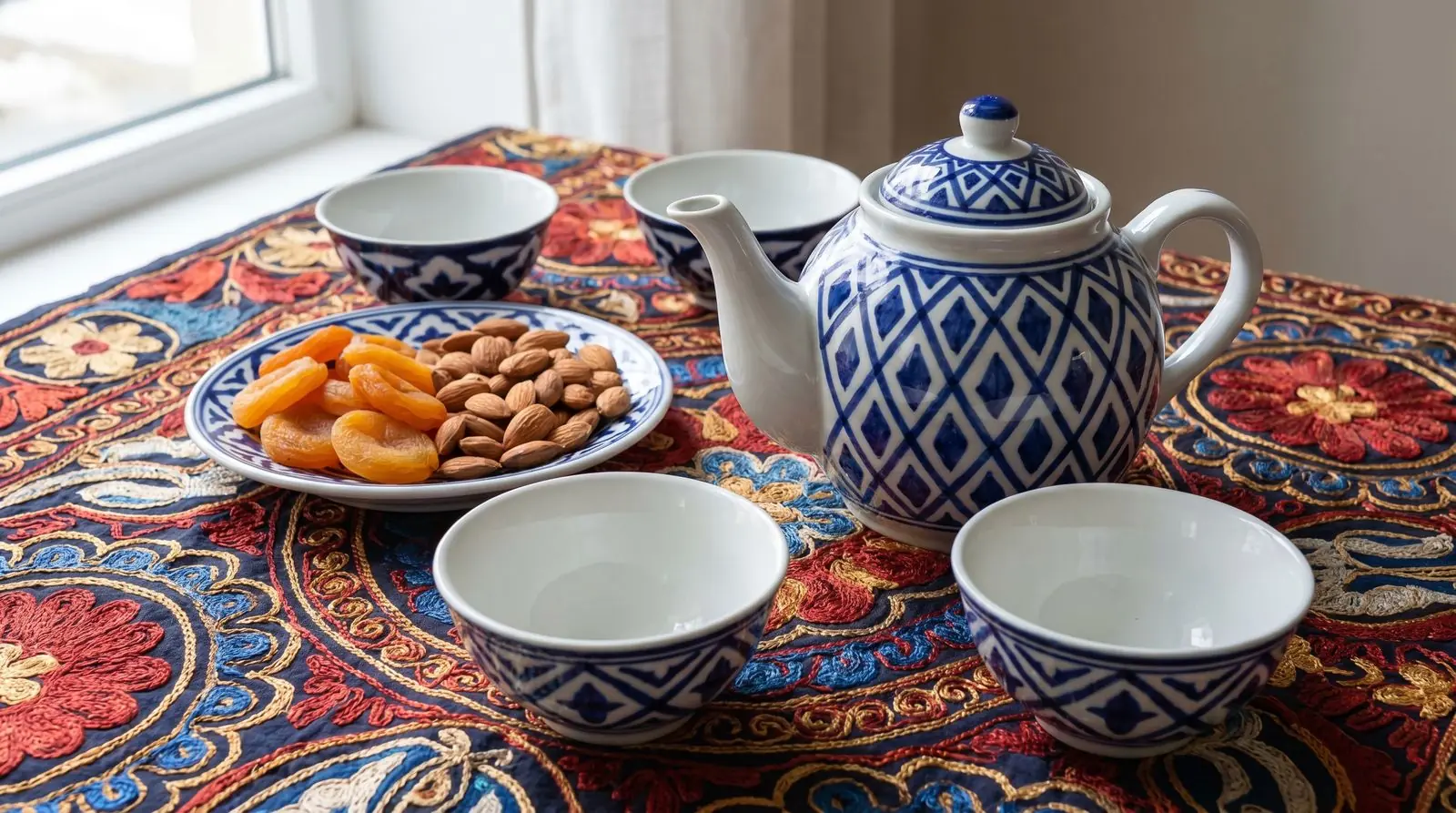
A lagan is the large flat dish that Uzbek plov is piled onto and shared from. Tea is drunk from a piala, a small handleless bowl, and poured from a choynak, the teapot. A kosa is a larger bowl, mostly for soup. Rishtan, a town in the Fergana Valley, is known for clay pottery glazed in blues with ishkor.
What is a lagan, and how is plov served on it?
The explanatory dictionary of the Uzbek language defines a lagan as a large, flat dish for thick food, as opposed to soups. Russian borrowed the word as lyagan, and Russian speakers also write it lagan; Russian dictionaries describe it as a large dish for plov or for fruit. Our catalogue uses the spelling lyagan.
Plov is cooked in a cast-iron kazan and then turned out onto a large lagan, traditionally one shared dish for the whole table. The order on the dish depends on the region. For Bukhara-style plov the rice goes on first, then onion and carrot fried in oil, and the meat last. People eat it with their hands or with a spoon. Which rice to cook it with is covered in our guide to rice for plov.
In 2016 UNESCO inscribed palov culture and tradition on the Representative List of the Intangible Cultural Heritage of Humanity. The entry presents palov as a sign of hospitality and a dish for weddings, New Year and other special occasions, and quotes a saying that guests may leave their host's house only after palov has been offered.
What are a piala and a kosa?
A piala (Uzbek piyola) is a bowl without a handle that widens towards the rim and stands on a low foot. In Uzbekistan it is above all a tea bowl. Russian dictionaries describe it as a shallow cup without a handle used in Central Asia, and trace the word to Persian.
A kosa is a larger bowl. The Uzbek explanatory dictionary describes it as bigger than a piala and used mainly for liquids and various other food, while the piala is defined as smaller than a kosa. The two are told apart by size and by what goes into them.
| Uzbek word | Also spelled | What it is | Used for |
|---|---|---|---|
| lagan | lyagan | large flat dish | plov and other thick dishes, fruit |
| kosa | bowl larger than a piala | soup and other liquid food | |
| piyola | piala | small bowl on a low foot, no handle | tea |
| choynak | pot with a spout and a handle | brewing and pouring tea |
How is tea poured from a choynak?
A choynak is a teapot with a spout and a handle, used both to brew tea and to pour it. Tea customs vary from family to family, and only a few are widely shared.
One of them is qaytarish, which means returning. Whoever pours fills a piala and tips it back into the choynak, usually three times, so the tea brews more fully; that warmed piala stays with them. The first bowl goes to the head of the family, the others follow by seniority, and the one pouring serves themselves last.
A piala is filled only partly, from under half to about two-thirds, so the tea cools enough to drink. In many families a partial pour is also a sign of respect. The host refills often, and Ohio State University's Uzbek language site notes that the more honoured the guest, the less tea goes into the cup.
What are Rishtan ceramics?
Rishtan (Uzbek Rishton) is a town in the Fergana Region of eastern Uzbekistan, between Kokand and Fergana. It is one of the oldest towns of the Fergana Valley and has long been regarded as the largest centre of glazed pottery in Central Asia. The Victoria and Albert Museum in London holds a 19th-century dish labelled as coming from Rishtan in the province of Fergana.
The craft starts with local clay, which is easy to shape and stands up to heat. A thin white layer of crushed quartz under the painting keeps the colours bright. The glaze, ishkor (Uzbek ishqor), is made from local plants: they are cut green and burned in heaps, and the fused salts are melted in a kiln at about 1,200 °C into a glassy mass. The glazed piece is then fired a second time at about 1,050 °C. Ishkor production was revived in the 1970s, and masters now also use imported copper, cobalt and manganese oxides alongside it.
The palette is cool: deep blue, light blue and turquoise on white, with green, brown, yellow and black from metal oxides. Red is hardly used. The typical pattern is islimi, flowing plant ornament, and some motifs carry a meaning. The pomegranate stands for family peace and plenty, chorgul (four flowers) for the four directions, parizoh shows a bird's feather, and the chilli pepper also appears. The lagan has kept its place as the leading Rishtan form, and since the 1990s some masters have painted calligraphy and architecture on large platters.
Is porcelain serveware the same as Rishtan ceramics?
No. Rishtan ware is clay pottery under a glaze, with a white quartz layer to give the colours a light ground. Porcelain is another material: Britannica describes it as vitrified pottery with a white, fine-grained body that is usually translucent.
The porcelain and serveware that SLB LATVIA sells is porcelain, hand-glazed and made in Uzbekistan for the Uzbek table: lyagan platters, pialas, teapots and plates. The range does not include Rishtan clay pottery.
How do you choose Uzbek serveware for a restaurant?
Start from the menu. The table below matches the main uses to the pieces in our range.
| Use | Pieces in the SLB LATVIA range |
|---|---|
| Plov and other dishes for sharing | lyagan, large and small |
| Tea | piala, classic teapot, small fluted teapot, cup, square saucer, sugar bowl |
| Salads and starters | salad bowl (large, small), square plate (small, medium, large) |
| Bread and shared plates | oval bread plate, rectangular serving tray, herring dish (medium, small) |
Traditionally plov comes to the table on one shared lagan. The catalogue lists the lyagan in a large and a small size without dimensions, so ask for the measurements in your enquiry and match them to your portions and tables. For tea, pair the porcelain piala with the classic porcelain teapot or the small fluted porcelain teapot, both sold as a choynak. The way tea is poured calls for one piala per guest and one teapot per table.
Under EU Directive 84/500/EEC, ceramic articles meant for contact with food must come with a written declaration of compliance at every marketing stage up to and including retail, so ask for it with your order. Our catalogue does not say whether the pieces are dishwasher-safe or microwave-safe, so check this before they go into daily service. The catalogue gives dry storage for the whole range.
How do you order Uzbek porcelain wholesale from SLB LATVIA?
SLB LATVIA supplies hotels, restaurants and cafés as well as retail and wholesale buyers, and the goods are cleared through customs in Rīga. The large lyagan and the small lyagan come in individual gift boxes, six to a case and 48 cases to a pallet. The piala and both teapots are packed in individual boxes with protective foam, also six to a case and 48 cases to a pallet.
Send the enquiry form with the pieces and quantities you need. Wholesale prices, minimum order quantities and lead times are shared after a short due-diligence exchange, and the team replies within two working days. Delivery is EXW Rīga, CIP or DAP.
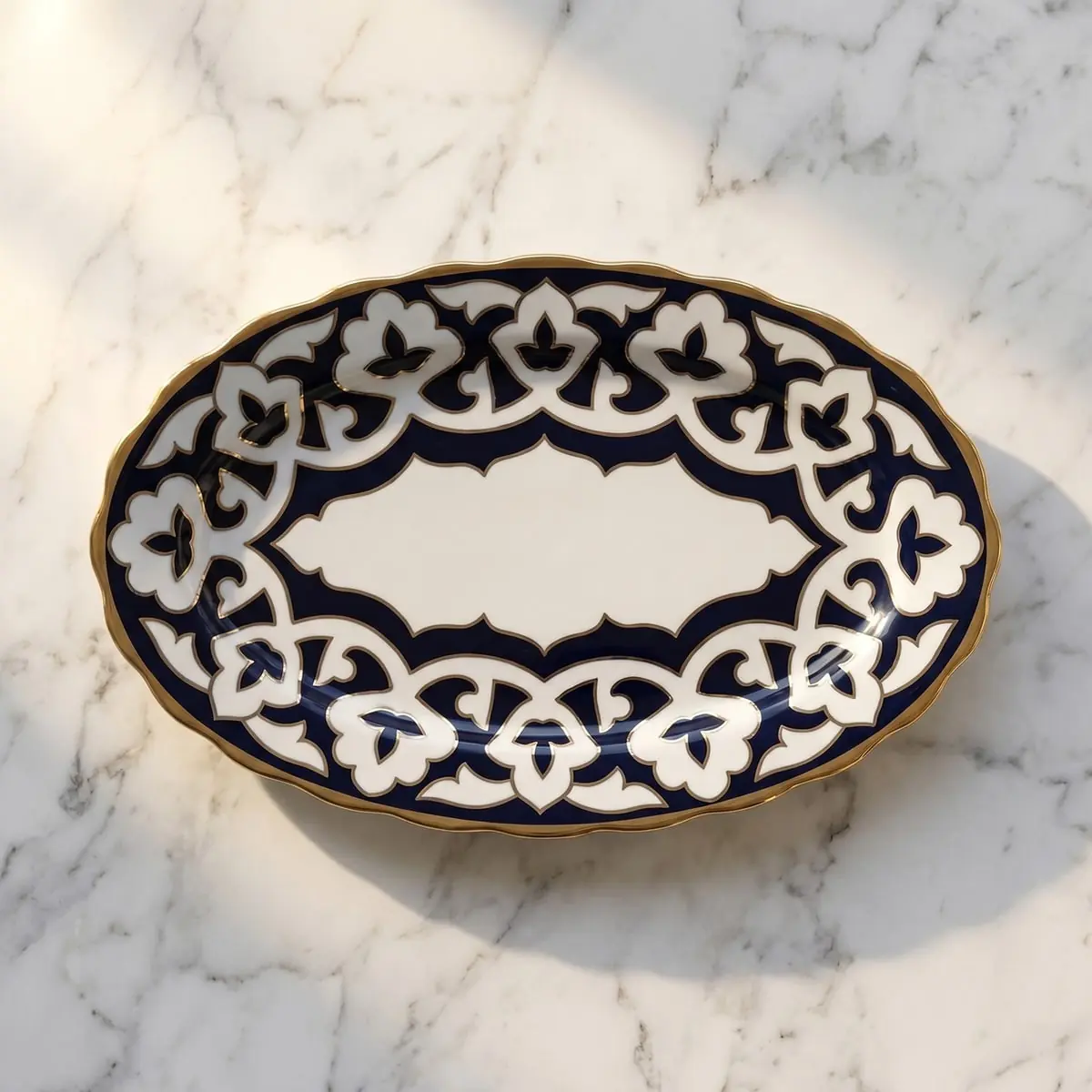
- Packaging
- Individual gift box
- Origin
- Uzbekistan
- Units per case
- 6
- Cases per pallet
- 48
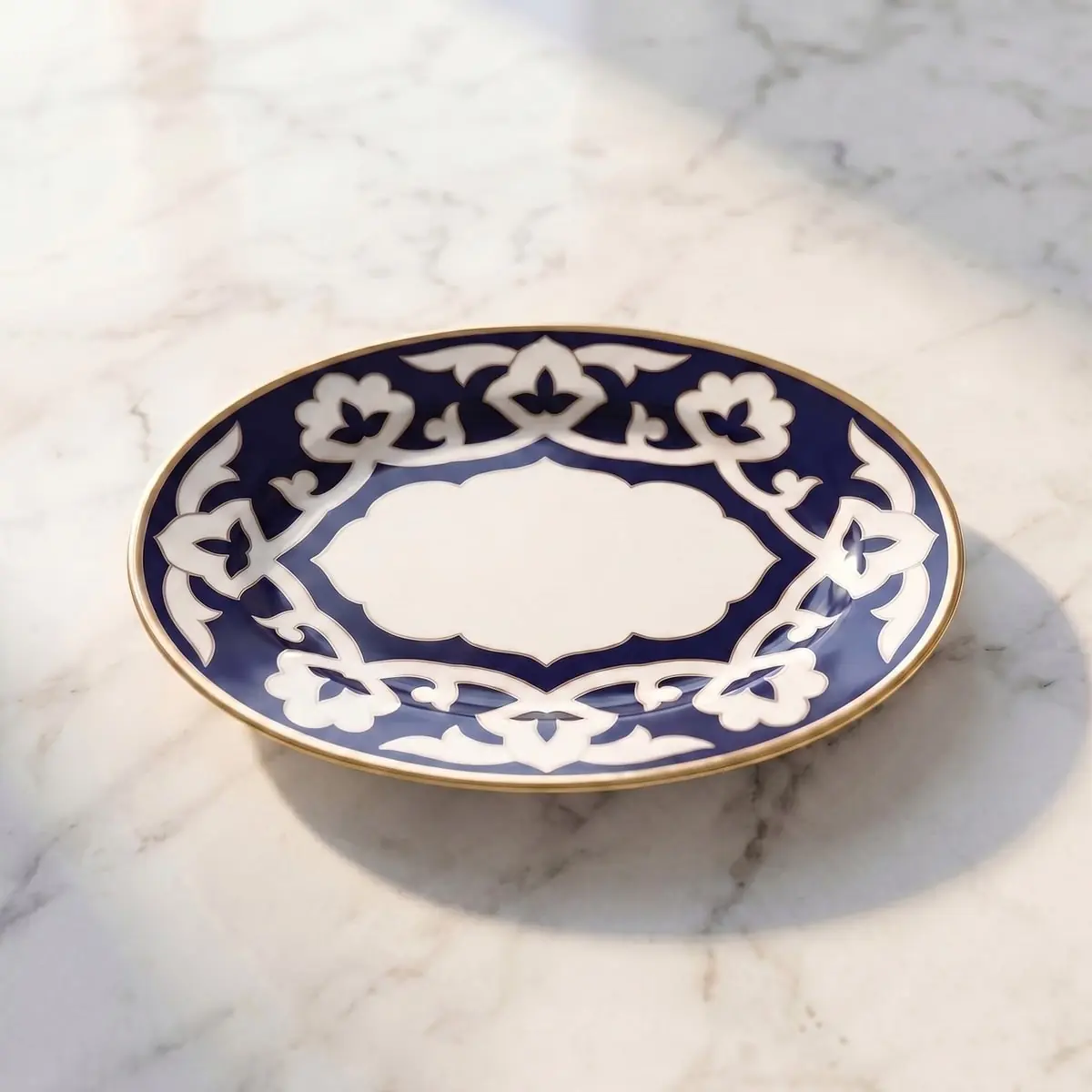
- Packaging
- Individual gift box
- Origin
- Uzbekistan
- Units per case
- 6
- Cases per pallet
- 48
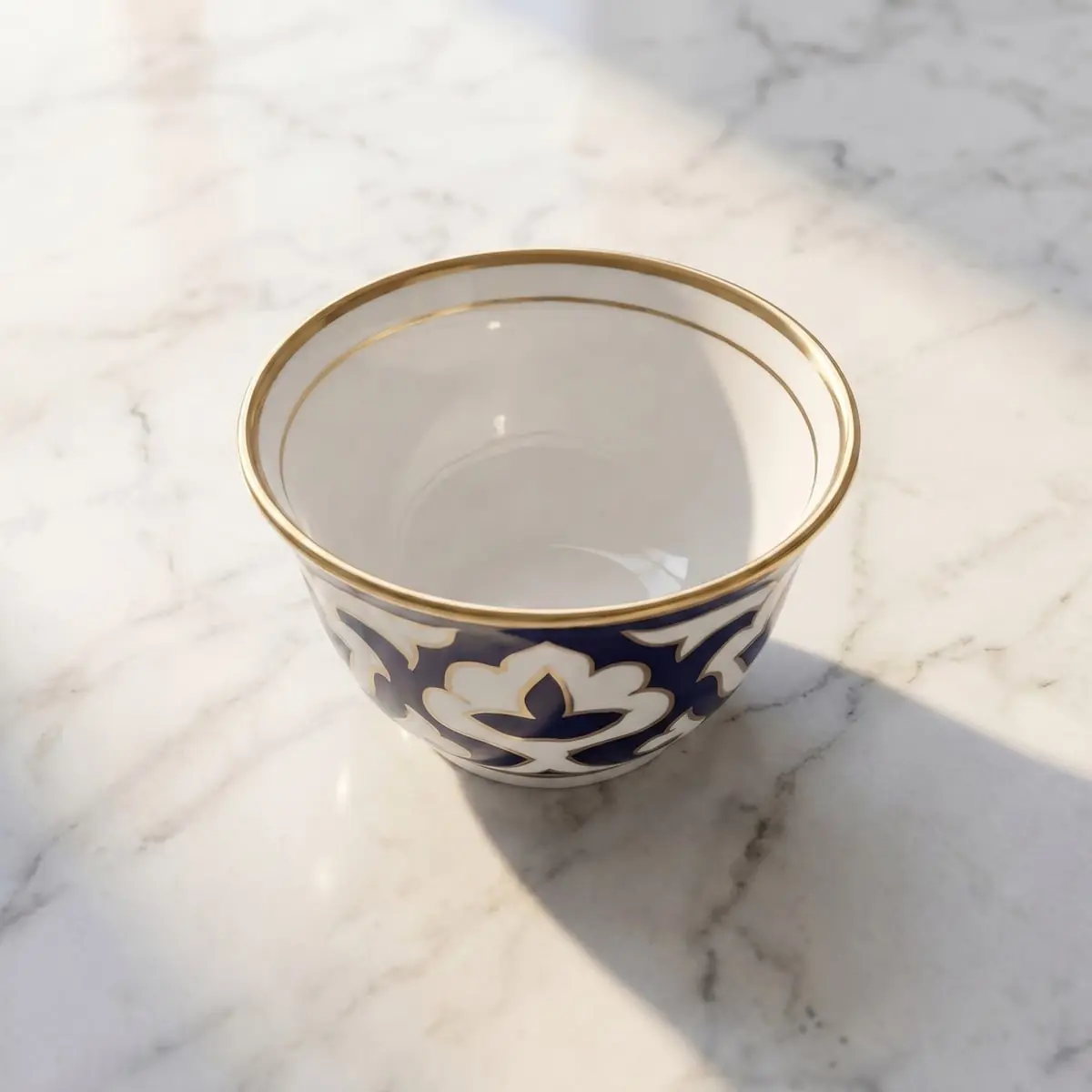
- Packaging
- Individual box with protective foam
- Origin
- Uzbekistan
- Units per case
- 6
- Cases per pallet
- 48
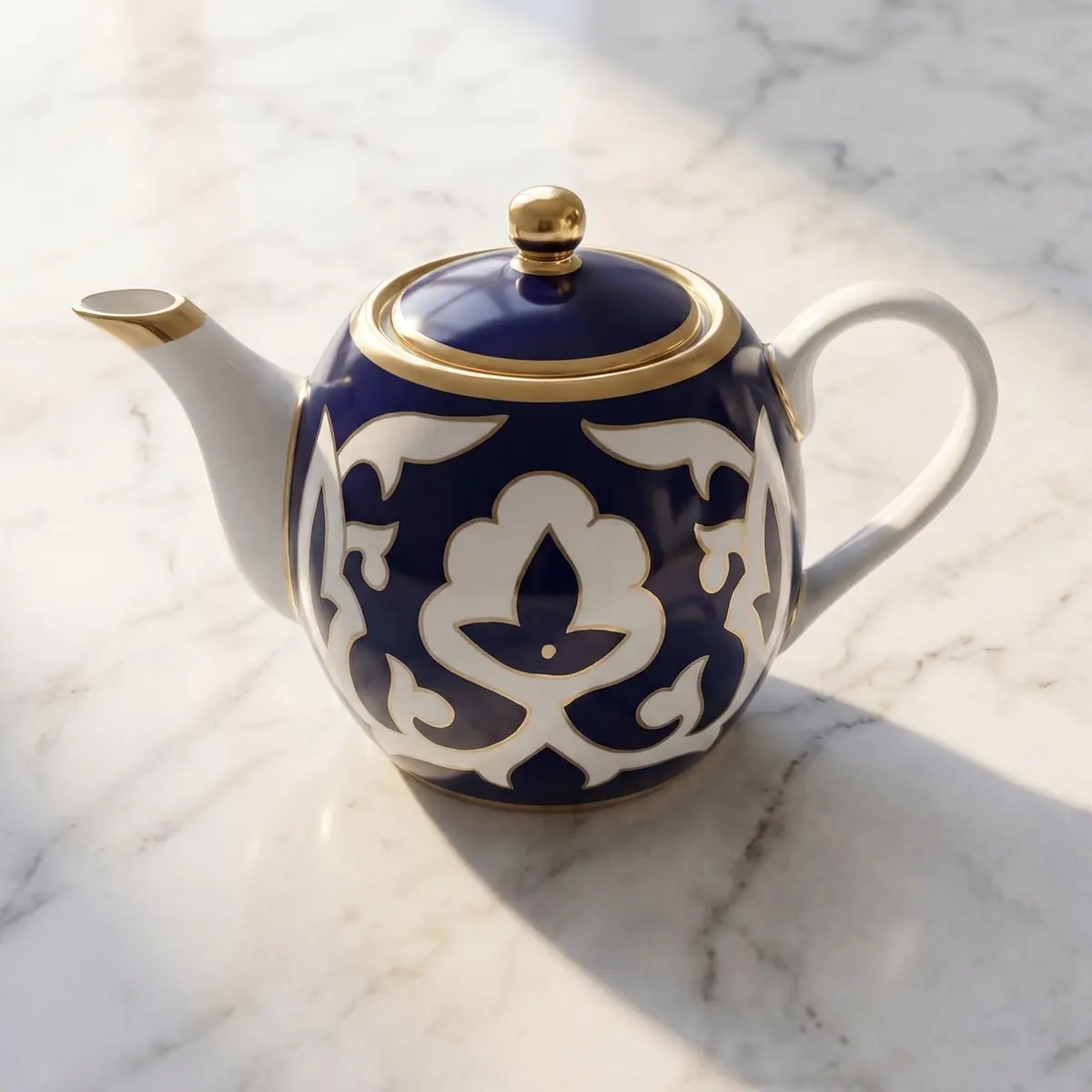
Classic porcelain teapot (choynak)
- Packaging
- Individual box with protective foam
- Origin
- Uzbekistan
- Units per case
- 6
- Cases per pallet
- 48
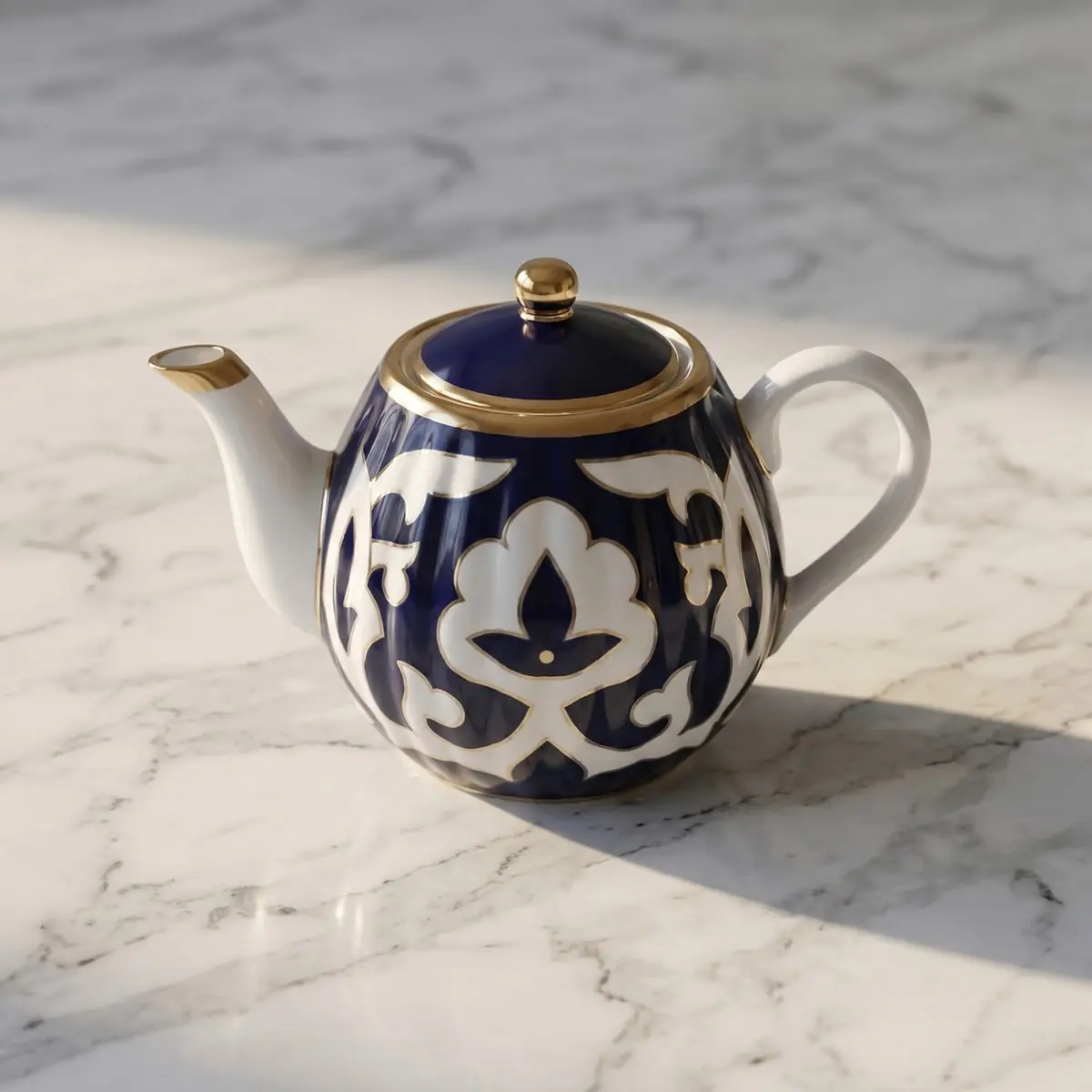
Small fluted porcelain teapot (choynak)
- Packaging
- Individual box with protective foam
- Origin
- Uzbekistan
- Units per case
- 6
- Cases per pallet
- 48